July 24, 2026
Building the Correct Rig Mat for the Job
What timber actually goes inside a rig mat, how to pick the right wood for your site conditions, when to add steel plating for extreme use, and how to decide between a 3-beam and 4-beam design.
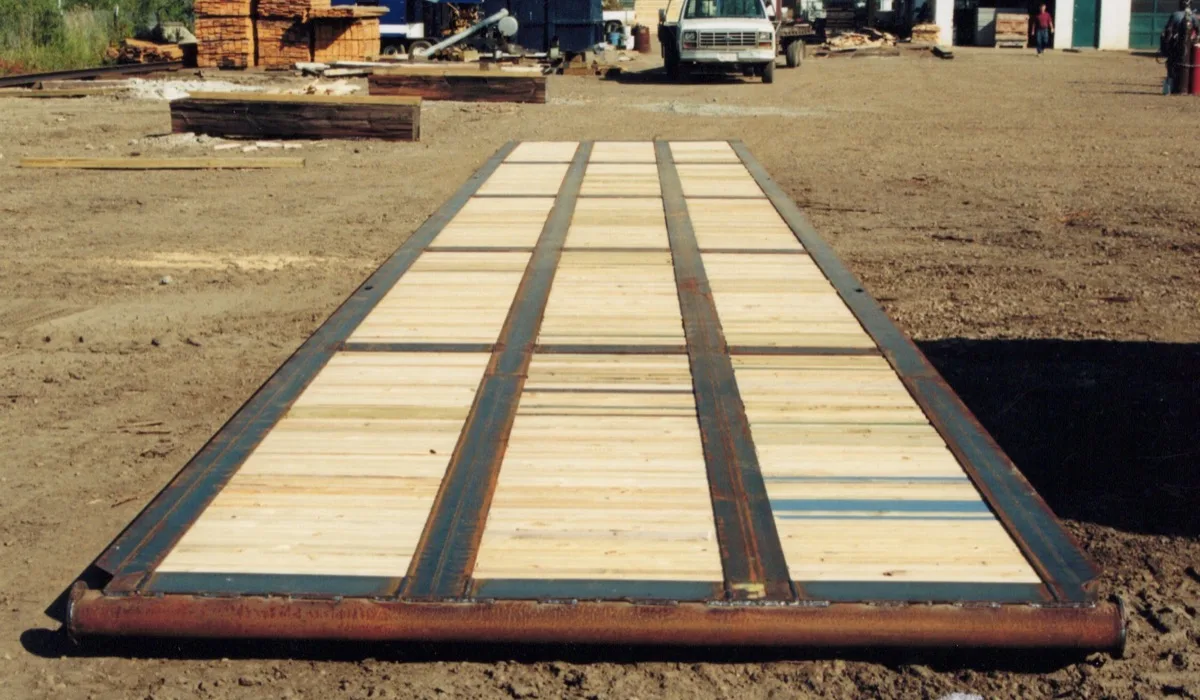
WHAT'S ACTUALLY INSIDE A RIG MAT
A standard Acre rig mat is built around either 3 or 4 steel I-beams running the length of the mat, filled edge-to-edge with 6x6 timbers. Our typical sizes are 8x20 and 8x40, but we can build as wide as 12 feet and as long as 60 feet for larger jobs — though at that length, a mat will start to deflect under its own span, so it's worth talking to us about what size actually fits your equipment and site before sizing up. The steel does the heavy structural work, spreading load across the ground evenly, while the timber deck gives you a flat, non-slip working surface and adds a layer of cushioning between equipment and the frame itself. The wood you choose for that fill isn't just cosmetic — it affects how the mat holds up over repeated moves, how it handles moisture, and how long it lasts before you're looking at a replacement.
COMMON TIMBER OPTIONS
Most rig mats in the field are filled with one of a few timber types, each with a different trade-off between cost, weight, and durability:
SPF (Spruce-Pine-Fir)
Today's standard fill for rig mats. Strong, cost-effective, and widely available, which keeps both price and lead times down without giving up the durability most jobs need.
Douglas Fir / Hem-Fir
Denser than SPF, but not commonly used — it costs more and has gotten harder to source in volume, and quickly, so build time and price do increase.
Pressure Treated Timber
Any of the above can be pressure treated for extra rot and moisture resistance. Worth the upgrade for mats that will sit on wet ground, muskeg, or be reused across many projects over several years — untreated timber will break down faster under constant moisture exposure.
FOR EXTREME USE: ADD A STEEL PLATE
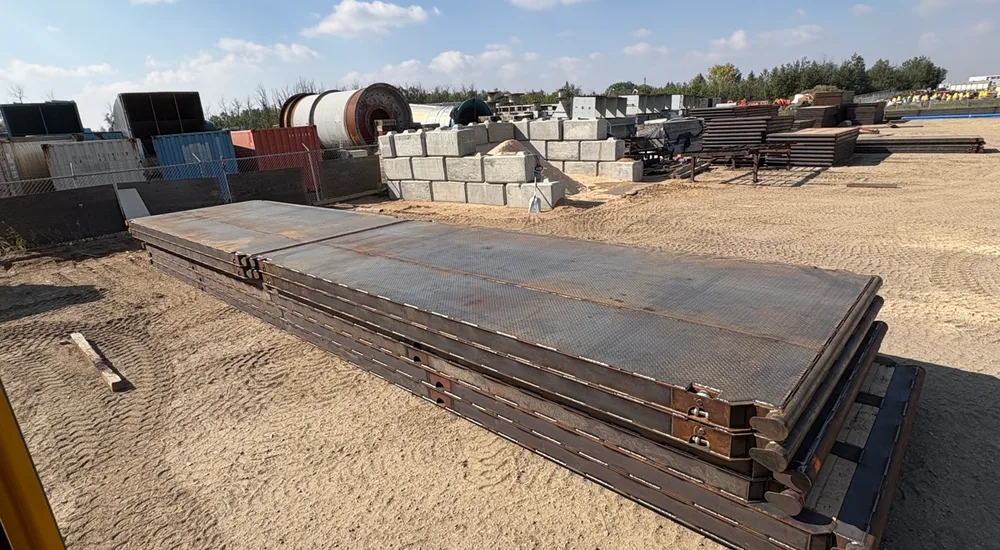
If your site conditions or equipment go beyond what a timber deck alone should take on — sustained heavy traffic, sharp-edged loads, or an operation where downtime for repairs isn't an option — we can add a steel plate over top of the timber fill. The plate takes the brunt of the wear instead of the wood underneath, which means less splitting and crushing over time and a mat that holds up over far more moves and reuses. It's the option to reach for when you want maximum durability and the longest possible service life out of a mat. See our Plated Mats for the full details, or ask us to add plating to a standard rig mat order.
WHICH WOOD SHOULD YOU USE?
In practice, it comes down to three questions:
- •What's driving on it? SPF handles the vast majority of drilling rigs, cranes, and heavy trucking without issue — it's the standard for a reason. For loads beyond what a timber deck alone should take on, add a steel plate rather than sourcing fir.
- •What's the ground like? Wet, low-lying, or muskeg sites call for pressure treated timber — untreated wood in constant moisture is the fastest way to shorten a mat's service life.
- •How many times will it be reused? A mat that's getting moved between sites for years is worth the upfront cost of treatment, and possibly plating. A short, single-site job may not need the upgrade.
If you're not sure, our team can look at your site conditions and equipment load and recommend the right combination — that's a conversation worth having before an order goes in, not after.
3-BEAM OR 4-BEAM?
An I-beam refers to the steel I-beams running the length of the mat under the timber deck — the beam count is the main factor in how much weight a mat is rated to carry and how it distributes that weight across soft or uneven ground.
The standard choice for most drilling operations, access roads, and general lay-down areas. Lighter, easier to transport and handle, and more than enough mat for the majority of oilfield loads.
Built for heavier, more concentrated loads — cranes, large rigs, and long-term high-traffic pads where extra weight distribution matters. Heavier and more expensive, but reduces ground pressure and mat flex under serious loads.
NOT SURE WHAT YOU NEED?
Tell us about your site and equipment, and we'll help you spec the right wood and beam count.
GET A QUOTE